


Card decks
TEAM Cards: Tension, Emotion, Atmosphere & Meaning
£55
212 cards that give students a language for what makes theatre land: Tension, Emotion, Atmosphere and Meaning. Every card begins “A moment where…”, a starting point for creating, discussing and refining moments that matter.
- 212 cards in four colour-coded categories
- Every card a ready-made devising prompt
- For ages 11 and up, GCSE to IB DP
- Free teacher guide with a 60-minute lesson
Shipped worldwide
Secure checkout by Shopify, in the ISTA Store. Prices in GBP. Any customs duties or import taxes are paid by the recipient.
What’s in the box
212 cards. Four ways to make a moment matter.
TEAM stands for Tension, Emotion, Atmosphere and Meaning: four qualities that shape how an audience experiences a moment of theatre. Every card begins the same way, “A moment where…”, so the starting point is always a quality of experience, never a plot point.
TEAM sets the weather of the stage. Hover over a category to feel it.
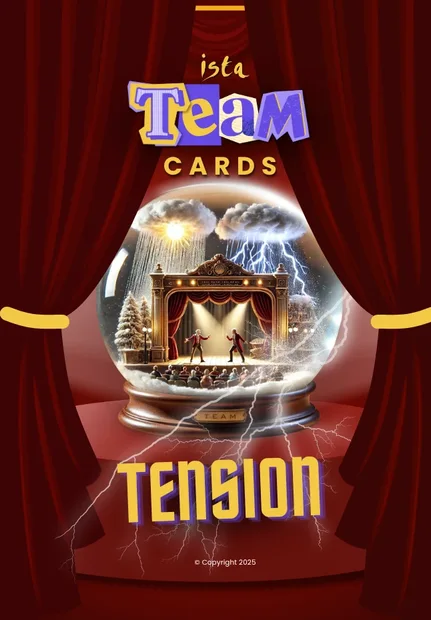 Tension 52 momentsPressure, suspense, conflict and anticipation.
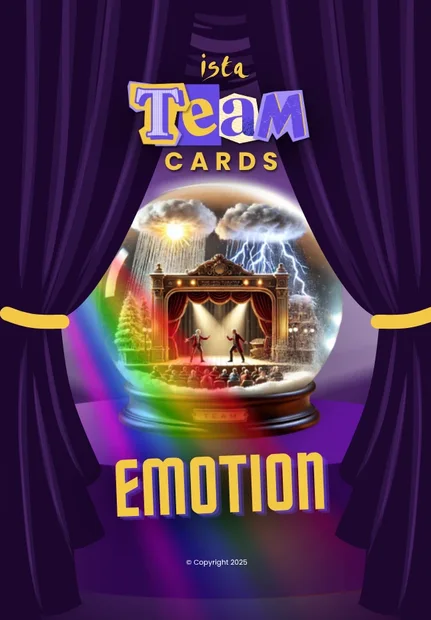 Emotion 52 momentsWhere feeling drives action, relationship or response.
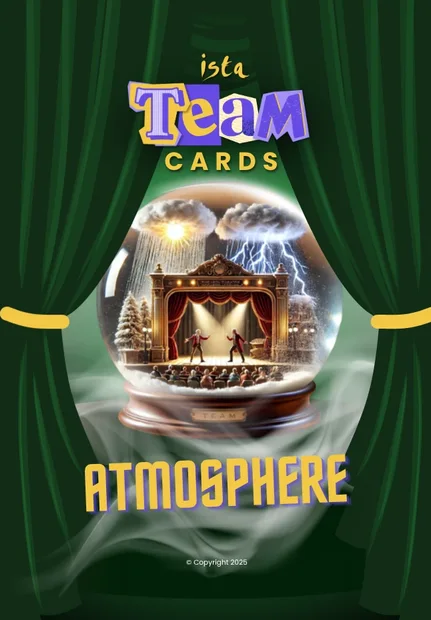 Atmosphere 52 momentsWhere mood, tone and environment shape the audience’s experience.
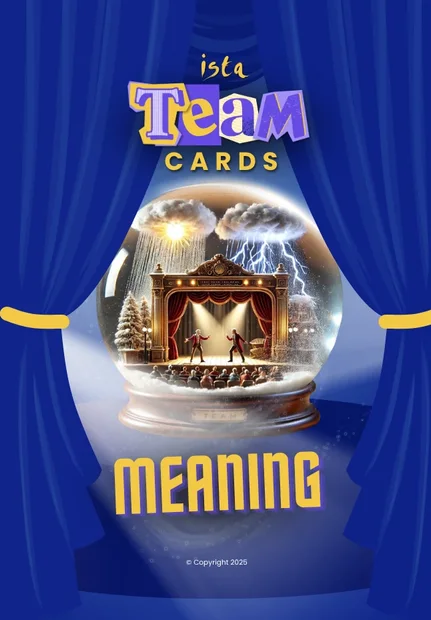 Meaning 52 momentsWhere performance communicates an idea, message or human truth.
Try it now
Draw a moment. Make it land.
Every card begins “A moment where…”. Draw one and give your group a minute to prepare, then ten to make it.
32 cards to try here, eight from each category. The full deck has 212.
Why naming the moment works
Students know when a moment lands. TEAM tells them why.
A language for what lands
Students feel when a moment works. TEAM lets them say whether it’s the tension, the emotion, the atmosphere or the meaning.
Named, so it can be repeated
Once students can name what’s happening in a moment, they can shape it on purpose, repeat it, and explain it.
Feedback beyond “I liked it”
Peer feedback names the choice that created the effect, in rehearsal and in written reflection alike.
Before defining the four terms, let students experience tension, emotion, atmosphere and meaning through practical work first. The language lands more easily once they’ve felt the thing it describes.
Reach for a card when
- A scene feels flat
- Students rush important moments
- The audience impact is unclear
- The emotional journey needs sharpening
- The atmosphere is inconsistent
- Students can’t explain their intention
The card needn’t stay in the final piece. Often it just finds the better choice.
The TEAM cycle
The more they go round, the more they think like theatre-makers.
Draw
Choose a TEAM card.
Explore
Experiment with theatrical possibilities.
Make
Create a moment inspired by the card.
Share
Show it to an audience, however small.
Reflect
Name what created their experience.
Refine
Replay it, strengthening what matters.
One deck, a whole year
From a one-minute starter to a term-long devising project
Starter
One card and one minute to prepare, then a minute to improvise it.
Devising stimulus
Start a new piece from a moment, before any talk of subject.
Rehearsal reset
When a scene feels flat, replay it with a card as the new focus.
Peer feedback
Which TEAM element was strongest, and which choice created it?
Script exploration
Which element does a scripted scene rely on? How do we strengthen it?
Assessment task
Set a card, or a small hand, as the basis for devising or analysis.
Cover lesson
Hand a few cards to a cover teacher. The structure runs itself.
Written reflection
“The strongest TEAM element in our work was… because…”
- Ages 11 and up
- KS3 and GCSE Drama
- A Level and BTEC
- IB MYP and DP Theatre
- Devising, rehearsal and analysis
- Teacher training and CPD
Ready to teach
A 60-minute TEAM lesson
From the free teacher guide: a whole lesson that takes a group from first card to a refined, named moment. Just add the deck.
Warm-up 0–10 min
One Tension or Atmosphere card shapes movement through the space.
Introduce TEAM 10–20 min
The four elements, through examples from the group’s own work.
Devise 20–35 min
Groups draw one card each and create a short moment from it.
Share 35–45 min
Each group performs. The audience names the element and what created it.
Refine 45–55 min
A second card, layered into the scene as a new element.
Reflect 55–60 min
“The strongest TEAM element in our work was… because…”
Put it on the wall
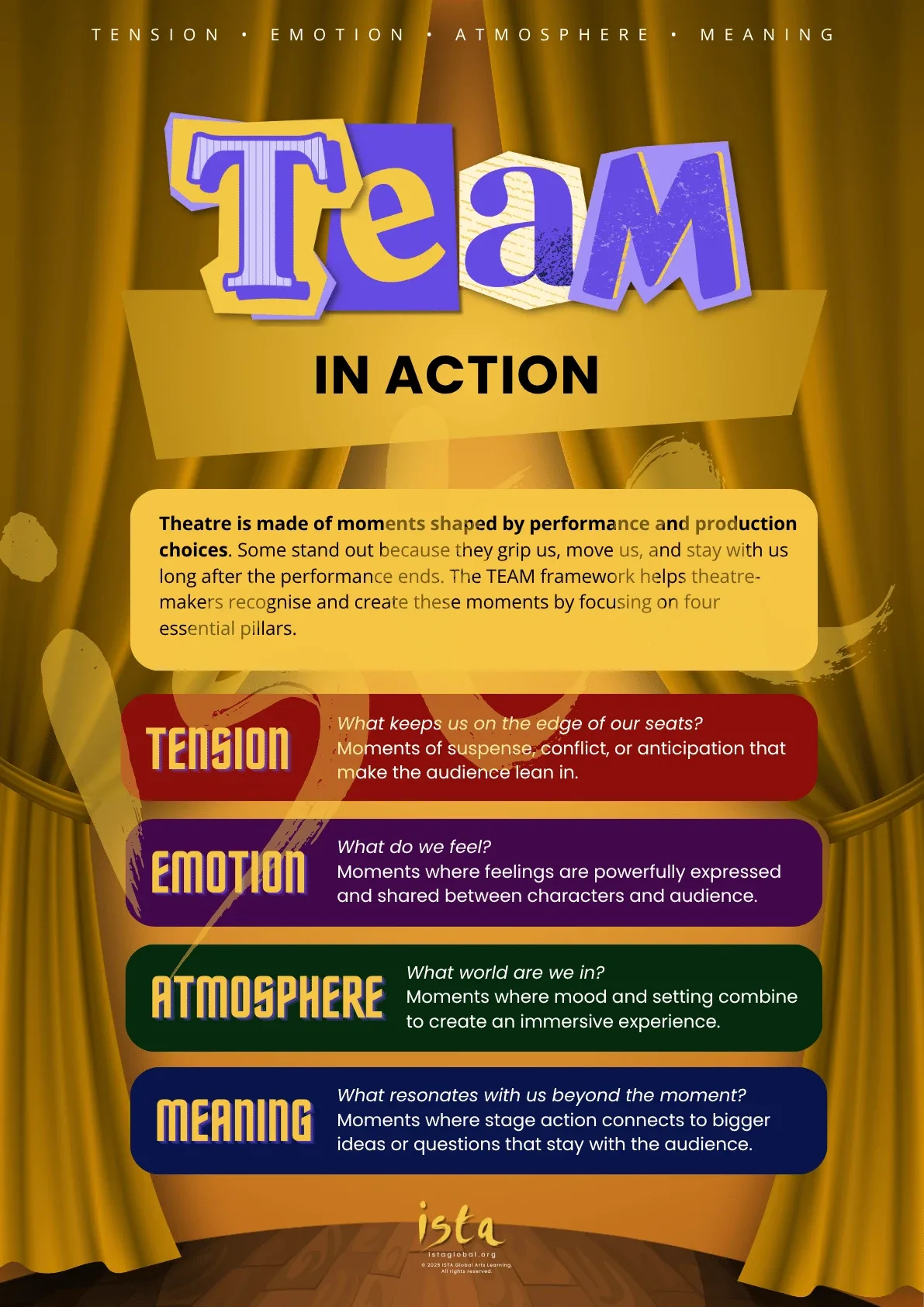
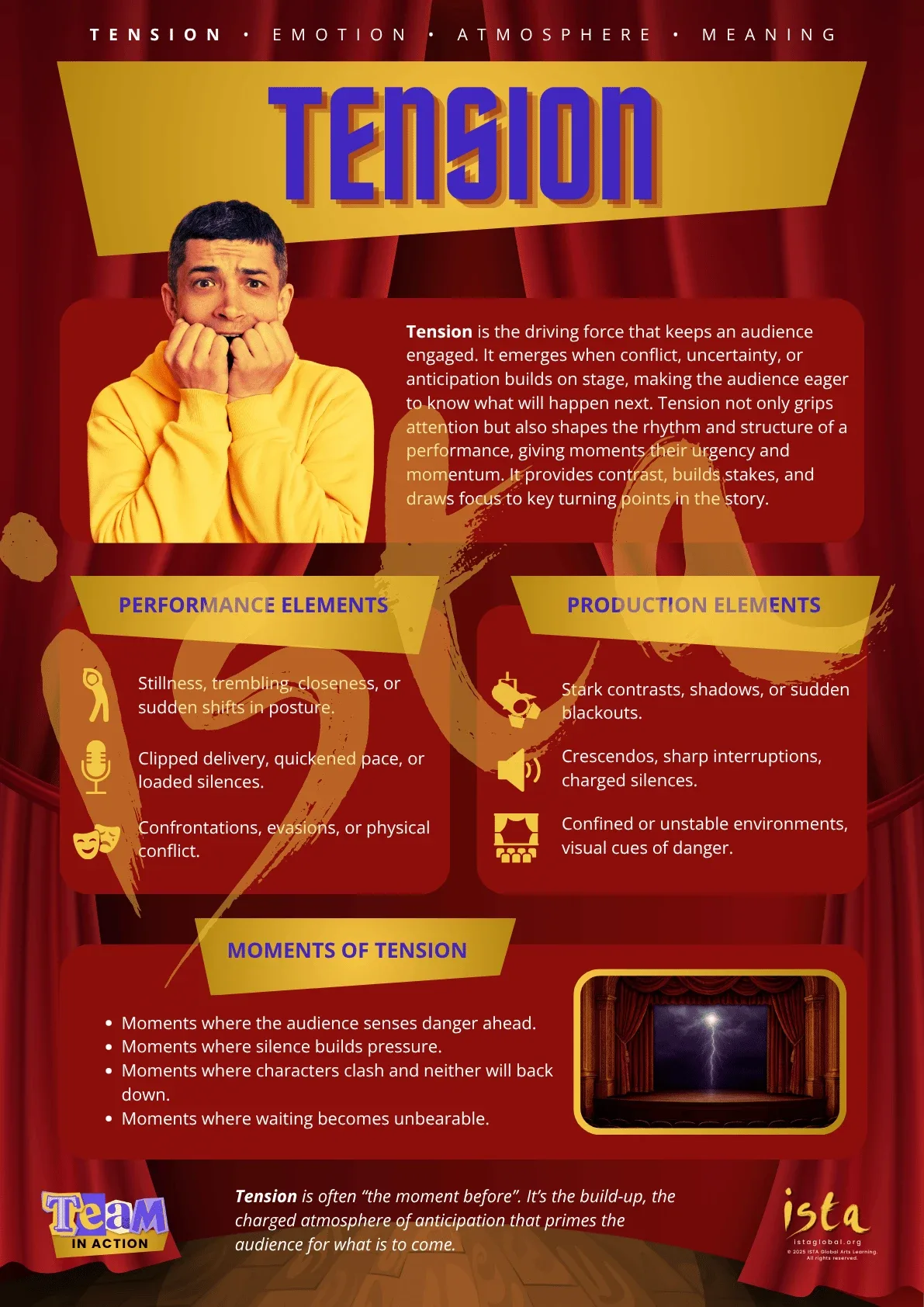
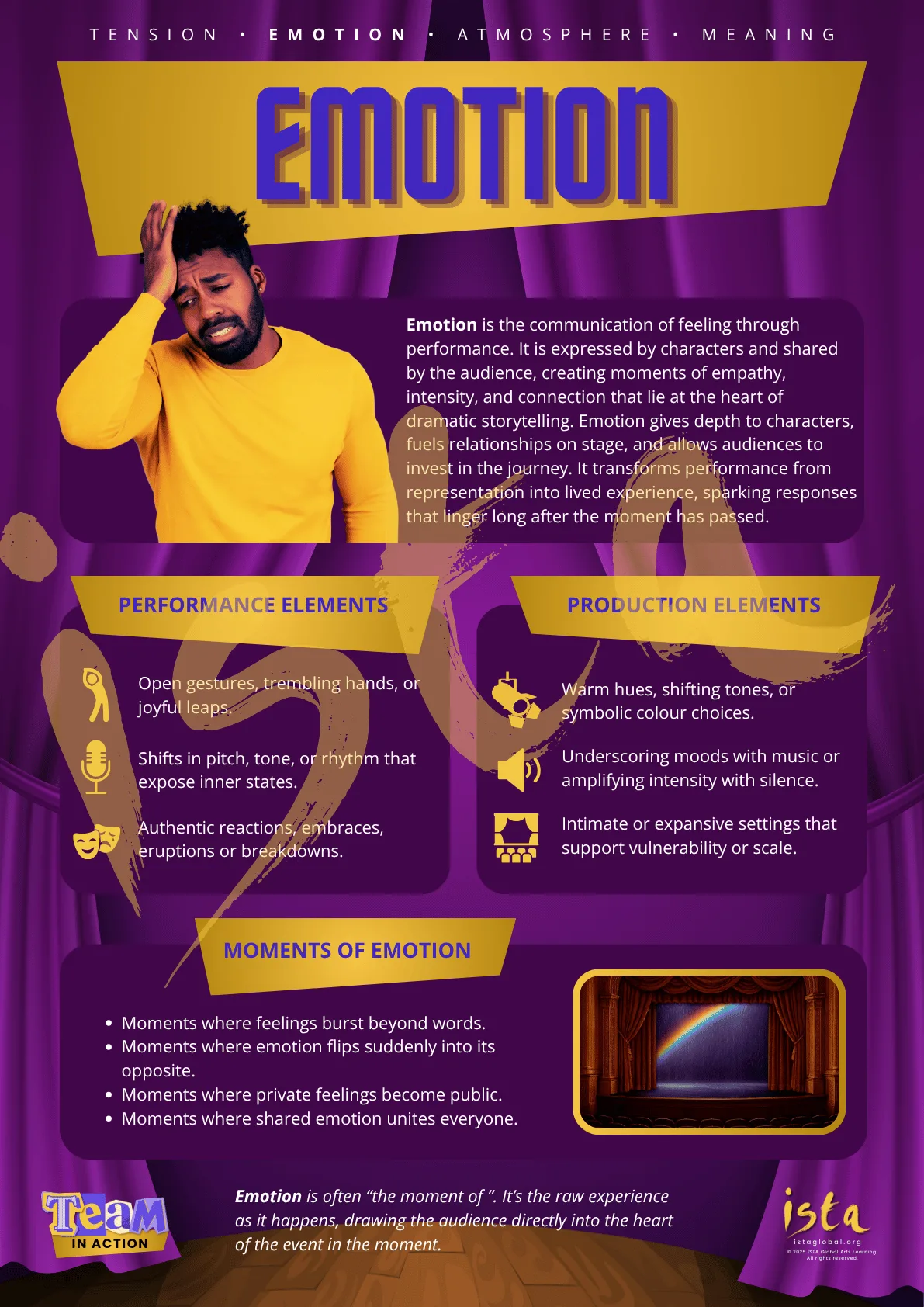
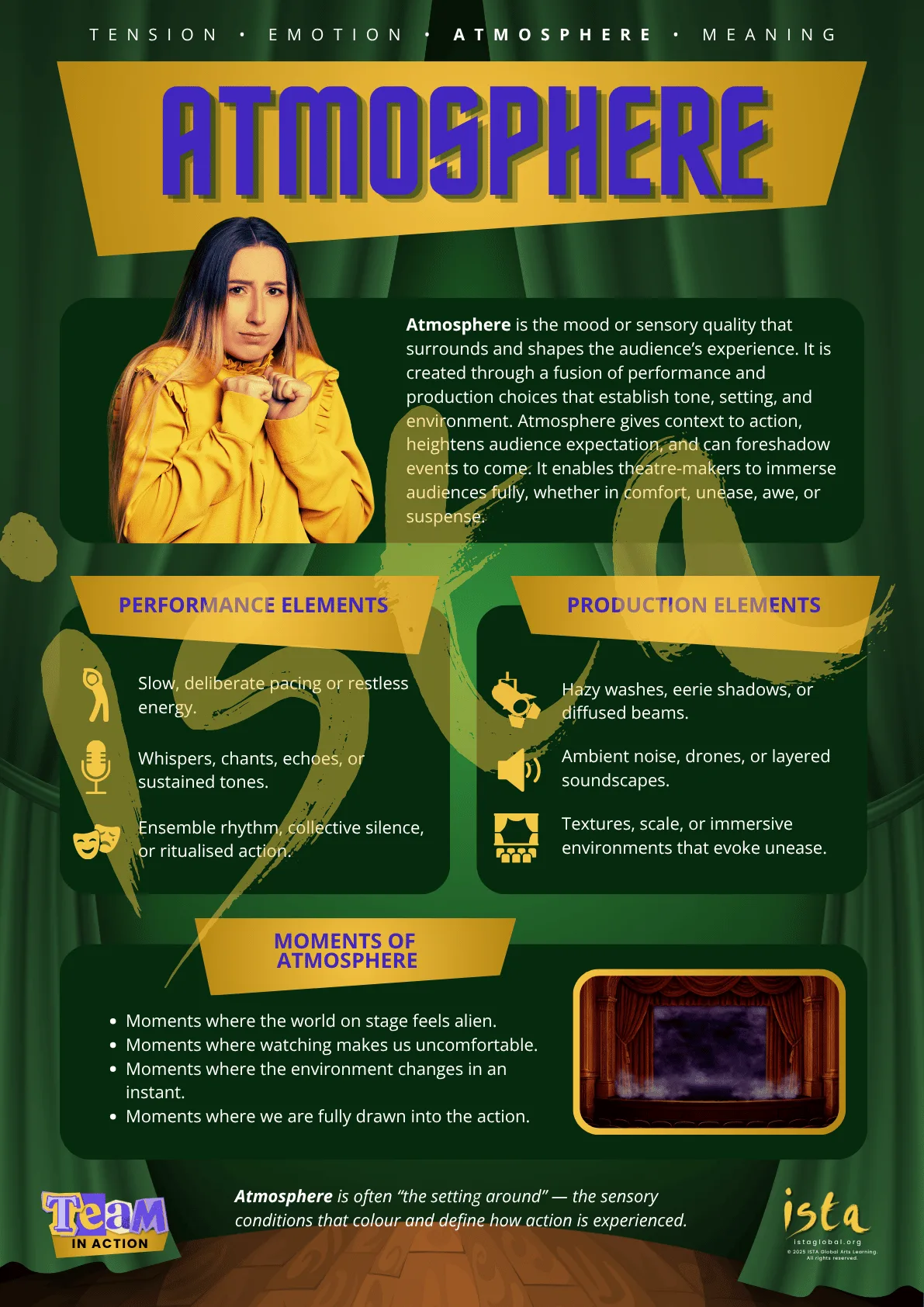
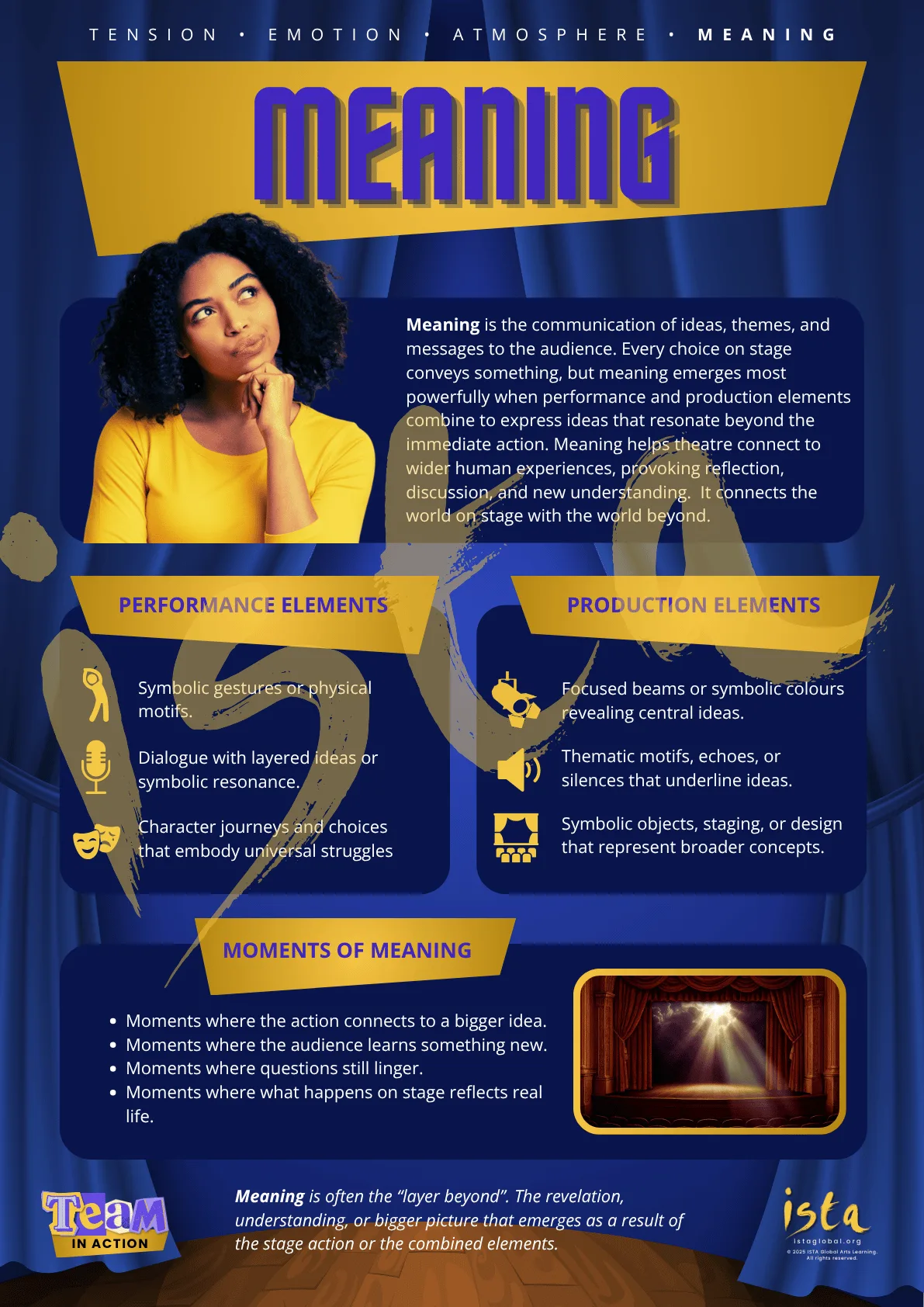
The TEAM in Action posters
Bring the TEAM framework to life on your classroom wall: Tension, Emotion, Atmosphere and Meaning, plus an overview, as a digital set to print as often as you like.
Ready for the full deck?
All 212 cards across Tension, Emotion, Atmosphere and Meaning, ready to draw, combine and return to all year. Free teacher guide included.

More card decks



From the artists behind these resources
The resources set the stage. Encore brings them to life.
Watch the people who made these cards, posters and guides teach with them. ISTA Encore is on-demand professional learning for arts educators: practical, filmed and ready for Monday’s lesson.
Or unlock the whole library for a year with an All-Access Pass: £300, or £250 for Ensemble and Company members.