

Kecak
Voice, Rhythm and Ritual
18 lessons · 3 hrs 56 min · 7 modules
What you’ll take away
By the end of this course
Understand Kecak in its cultural and historical context
Trace Kecak’s development from the vocal traditions associated with Sanghyang to the staged ensemble theatre form practised in Bali today, while clearly distinguishing theatrical performance from ritual practice.
Analyse Kecak’s performance conventions
Recognise how interlocking vocal rhythms, breath, silence, gesture, formation and spatial focus work together to create a unified ensemble performance.
Explore voice as a theatrical instrument
Understand how Kecak uses gamelan suara, or voice orchestra, to create pulse, texture, atmosphere and dramatic energy without conventional musical instruments.
Examine how ensemble creates story
Explore how Ramayana episodes are shaped through rhythm, repetition, physical action and collective focus rather than through a fixed script or dialogue-led storytelling.
Investigate leadership and collective response
Understand how leadership, improvisation and deep listening allow a large ensemble to remain responsive, precise and alive in performance.
Apply Kecak principles to your own practice
Experiment with transferable principles of rhythm, breath, listening, atmosphere and ensemble responsibility while approaching Kecak with cultural care and respect.
About this course
What this course covers
Kecak is one of Bali’s most recognisable ensemble theatre forms: a powerful meeting of voice, rhythm, movement and collective focus. Known for its interlocking waves of ‘cak’ chanting, Kecak transforms the human voice into gamelan suara — a voice orchestra capable of creating rhythm, atmosphere and dramatic action without instruments. This course places Kecak within its Balinese cultural and historical context, tracing its inspiration in Sanghyang chanting and its development as a staged theatrical form from the 1930s onwards.
I Wayan Dibia and Rucina Ballinger unpack the craft of Kecak through interlocking vocal patterns, breath, silence, gesture, formation, spatial focus, leadership and improvisation. Filmed workshops with students from Bali Island School bring these principles into practice, while exploration of the Ramayana reveals how character, chorus, fire, light, space and audience proximity combine to create Kecak’s distinctive theatrical world.
The course also considers Kecak as a living form, evolving through changing participation, site-specific work, education and international collaboration. Throughout, the emphasis is not on reproducing Kecak, but on understanding its cultural context and learning thoughtfully from its principles of rhythm, listening, ensemble responsibility and collective creation.
Before you enrol
Everything you need to know before you begin
Designed for
- Theatre students exploring world theatre traditions
- Theatre teachers bringing Kecak into the classroom
- Performers and theatre-makers developing physical performance skills
- Educators exploring theatre traditions in cultural context
- Anyone curious about Balinese performance
How you’ll learn
- Expert guidance from leading specialists in Balinese performance and culture
- Practical demonstrations of Kecak’s vocal and physical techniques
- Student workshops bringing performance conventions to life
- Guided exploration of rhythm, breath, gesture, formation and collective voice
- Guided exploration of rhythm, breath, gesture, formation and collective voice
Course roadmap
How this course is structured
7 modules · 18 lessons · 3 hrs 56 min · 1 free preview
PROLOGUEWelcome & Introduction1 lesson · 6 min
- Welcome to Kecak: Course Overview6 min
MODULE ONEKecak in Context: Ritual, Evolution, and Community3 lessons · 23 min
- Lesson 1: Origins of Kecak: From Sanghyang to Secular Theatre6 min
- Lesson 2: Religion, Harmony, and the Collective Voice10 min
- Lesson 3: Society, Performance, and Collaboration7 min
MODULE TWOPerformance Conventions: Voice, Rhythm, and Formation4 lessons · 52 min
- Lesson 1: The Ensemble as Instrument17 min
- Lesson 2: Rhythm, Breath, and Silence6 min
- Lesson 3: Gesture, Formation, and Spatial Focus19 min
- Bonus Material: Kecak Basics — Your First StepsFree preview10 min
MODULE THREETraditional Performance Material: The Ramayana and Ensemble Storytelling4 lessons · 1 hr 15 min
- Lesson 1: The Ramayana in Kecak: Story as Structure, Rhythm, and Environment37 min
- Lesson 2: Performing the Ramayana Roles11 min
- Lesson 3: Improvisation, Leadership, and Ensemble Response16 min
- Bonus Material: Advanced Layering — Building to Five Voices11 min
MODULE FOURSound, Space and Atmosphere3 lessons · 1 hr 2 min
- Lesson 1: Fire, Light, and the Theatrical Setting9 min
- Lesson 2: The Sound of Community15 min
- Bonus Material: Kecak — A Complete Live Performance38 min
MODULE FIVEContinuity and Legacy: Kecak in the Modern World2 lessons · 13 min
- Lesson 1: Kecak Today: Performance, Innovation, and Community Participation8 min
- Lesson 2: Enduring Meanings & Global Resonance5 min
EPILOGUECourse Closure1 lesson · 5 min
- Final Reflections5 min
Learn from the experts
About your presenters
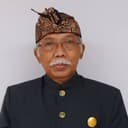
Dr I Wayan Dibia
Balinese performing artist, scholar and master teacher
I Wayan Dibia is one of Bali’s foremost performers, choreographers, scholars and teachers of traditional Balinese performing arts. His career spans performance, choreography, research and education, with particular expertise in Balinese dance-drama and mask traditions. A former professor and director of the Indonesian Institute of the Arts in Denpasar, he has taught, performed and presented Balinese arts internationally, while remaining deeply connected to the living traditions and communities from which his practice emerges.

Rucina Ballinger
Balinese arts and culture specialist, writer and educator
Rucina Ballinger is a writer, educator and cultural specialist whose work has focused extensively on the arts, traditions and cultural life of Bali. A long-term resident of the island, she has written and taught widely about Balinese performance, ceremony and society, helping international audiences engage with Bali beyond its surface representations. Her work brings together cultural research, lived experience and a longstanding engagement with Balinese artists and communities.
Before you buy
Frequently asked questions
Is this course suitable for IB Theatre teachers and students?
Yes. The course offers cultural context, performance conventions, practical workshops and approaches to embodied exploration that are relevant to the study of world theatre traditions. It is not designed exclusively for IB Theatre, however, and is equally relevant to non-IB educators, students and theatre practitioners.
Is the course theoretical or practical?
Both. Historical, cultural and theatrical context is combined with practical exploration of voice, rhythm, breath, silence, gesture, formation, spatial focus, leadership and ensemble response.
Can I learn from the course if I am working independently?
Yes. Although Kecak is fundamentally an ensemble form, the course identifies ways solo learners can explore principles such as breath, rhythmic precision, repetition, focus and attentive listening.
Take it further
From the ISTA Store
 IB DP Theatre Student HandbookAligned with the IB theatre guide, it features creative exercises, assessment tips, and space for journaling.£39.00Buy Now
 Theatre Traditions - Digital Poster SetBring world theatre to life in your classroom with this collection of 24 high-quality posters, designed to inspire independent research and celebrate the vibrant traditions that exist in the world.£50Buy Now
 Theatre in the World - Digital Poster SetThis set of three posters helps students broaden their understanding of theatre’s significance in communities worldwide and reflect on their engagement with diverse performance traditions.£12Buy Now
Continue your learning journey
Explore more expert-led Encore courses
ISTA Encore
Watch the free previews
Create your free ISTA account and we’ll take you straight to Kecak inside STAGE.



Already have an account? Log in