

Topeng
Masks, Movement and Meaning in Balinese Theatre
17 lessons · 3 hrs 18 min · 7 modules
What you’ll take away
By the end of this course
Understand Topeng within its Balinese cultural and spiritual context
Explore how ritual, history, community and philosophies of harmony shape the purpose and practice of Topeng.
Recognise the principal Topeng masks and characters
Understand how characters including Keras, Tua, Panasar, Dalem, Bondres and Sidhakarya contribute to the dramatic and ritual structure of performance.
Explore Topeng’s codified movement language
Develop an understanding of agem, tandang and tangkep, and how alus and keras qualities shape physical characterisation.
Understand transformation through mask and embodiment
Explore how breath, posture, rhythm, focus and the release of everyday identity enable the performer to bring the mask alive.
Analyse storytelling and improvisation in Topeng
Discover how Babad narratives, humour, contemporary commentary and audience interaction combine structure with spontaneity.
Understand the relationship between performer, music and ensemble
Explore how gamelan, voice, rhythm and collective awareness shape timing, atmosphere and theatrical presence.
Apply Topeng principles to your own theatre practice
Use ideas drawn from mask, movement, rhythm, ensemble and improvisation as starting points for practical exploration, while engaging respectfully with the tradition.
About this course
What this course covers
Discover the extraordinary world of Topeng with renowned Balinese artist and scholar I Wayan Dibia and writer, educator and cultural specialist Rucina Ballinger. Combining expert guidance, authentic performance footage and practical student workshops, this course takes you inside Bali’s living tradition of masked dance-drama, where theatre, ritual, history, humour and community are deeply connected.
Explore the cultural and spiritual foundations of Topeng before moving into its practical performance language: sacred masks, character transformation, codified movement, gesture, voice, rhythm and improvisation. Discover how Babad chronicles bring Balinese history into performance, how gamelan musicians and performers work together, and how humour and audience interaction keep centuries-old stories responsive to the present.
Alongside the core lessons, you’ll encounter rare footage of Topeng within ceremonial and community contexts, practical workshops with students from Bali Island School, and supporting resources for further exploration. Whether you are teaching, studying or making theatre, you’ll leave with a deeper understanding of Topeng as both a distinctive theatrical form and a living cultural practice, alongside practical ideas that can enrich your own theatre-making.
Before you enrol
Everything you need to know before you begin
Designed for
- Theatre students exploring world theatre traditions and intercultural performance practice
- Theatre teachers introducing Topeng, mask work or Balinese performance traditions
- Performers and theatre-makers interested in mask, movement and physical transformation
- Educators exploring embodied, ensemble-based approaches to theatre learning
How you’ll learn
- Expert guidance from I Wayan Dibia and Rucina Ballinger
- Authentic Topeng performance footage from Balinese ceremonial and community contexts
- Practical demonstrations of masks, movement, character, voice and rhythm
- Structured learning across five modules, moving from context into performance practice
- Guided observation connecting cultural understanding with practical exploration
Course roadmap
How this course is structured
7 modules · 17 lessons · 3 hrs 18 min · 2 free previews
PROLOGUEWelcome to Topeng1 lesson · 6 min
- Welcome & IntroductionFree preview6 min
MODULE ONETopeng in Context: Theatre, Ritual, and Community3 lessons · 17 min
- Lesson 1: Origins of Topeng: Storytelling as CeremonyFree preview4 min
- Lesson 2: Religion, Harmony, and the Community4 min
- Lesson 3: Society, Caste, and Character9 min
MODULE TWOPerformance Conventions: Masks, Movement, and Transformation3 lessons · 37 min
- Lesson 1: The Sacred Mask
- Lesson 2: The Character Masks of Topeng16 min
- Lesson 3: The Language of Movement and Gesture21 min
MODULE THREETraditional Performance Material: Storytelling and Improvisation3 lessons · 38 min
- Lesson 1: The Journey of a Topeng Performance20 min
- Lesson 2: The Narrative Source: The Babad5 min
- Lesson 3: The Art of Improvisation13 min
MODULE FOURMusic, Voice, and Ensemble3 lessons · 29 min
- Lesson 1: Performing with the Gamelan10 min
- Lesson 2: Voice, Chant, and the Language of Play10 min
- Lesson 3: Ensemble Awareness9 min
MODULE FIVEContinuity and Legacy: Topeng in the Modern World3 lessons · 1 hr 5 min
- Lesson 1: Topeng Today8 min
- Lesson 2: Enduring Meanings & Global Resonance5 min
- Bonus Material: Topeng Sidhakarya — A Complete Ritual Performance52 min
EPILOGUECourse Closure1 lesson · 6 min
- Course Wrap-Up: Closing Reflections6 min
Learn from the experts
About your presenters
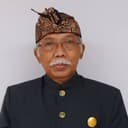
Dr I Wayan Dibia
Balinese performing artist, scholar and master teacher
I Wayan Dibia is one of Bali’s foremost performers, choreographers, scholars and teachers of traditional Balinese performing arts. His career spans performance, choreography, research and education, with particular expertise in Balinese dance-drama and mask traditions. A former professor and director of the Indonesian Institute of the Arts in Denpasar, he has taught, performed and presented Balinese arts internationally, while remaining deeply connected to the living traditions and communities from which his practice emerges.

Rucina Ballinger
Balinese arts and culture specialist, writer and educator
Rucina Ballinger is a writer, educator and cultural specialist whose work has focused extensively on the arts, traditions and cultural life of Bali. A long-term resident of the island, she has written and taught widely about Balinese performance, ceremony and society, helping international audiences engage with Bali beyond its surface representations. Her work brings together cultural research, lived experience and a longstanding engagement with Balinese artists and communities.
Before you buy
Frequently asked questions
Do I need previous experience of Topeng or Balinese theatre?
No. The course begins with Topeng’s cultural, historical and spiritual foundations before progressively introducing its masks, characters, movement vocabulary, storytelling and performance conventions. No previous knowledge of Balinese theatre is required.
Is this course suitable for IB Theatre students and teachers?
Yes. The course is particularly valuable for those exploring world theatre traditions. It provides cultural context, specialist terminology, performance conventions, practical demonstrations and authentic performance material that can support both classroom learning and independent investigation.
Is the course practical or mainly theoretical?
Both. Cultural understanding provides the foundation, but the course continually moves into practice. You’ll observe workshops exploring mask, movement, rhythm, character, voice, improvisation and ensemble, with approaches you can investigate in your own practical work.
What additional content is included beyond the main lessons?
The course extends well beyond the presenter-led lessons. You’ll encounter rare excerpts from Topeng performed within ceremonial context, alongside filmed practical workshops with students from Bali Island School that demonstrate how key principles can be introduced and explored. Supporting materials also help you deepen your understanding and continue your investigation beyond the course itself.
Continue your learning journey
Explore more expert-led Encore courses
ISTA Encore
Watch the free previews
Create your free ISTA account and we’ll take you straight to Topeng inside STAGE.



Already have an account? Log in