Area of Learning
Exploring Cultural Waves: Celebrating diversity and understanding how cultural shifts shape our world. This festival invites young people to explore how cultures evolve, intersect, and influence identity and creativity. Through collaborative theatre-making, participants will reflect on the dynamic nature of cultural expression and the role the arts play in fostering connection, understanding, and celebration of difference.
Cultural Experience
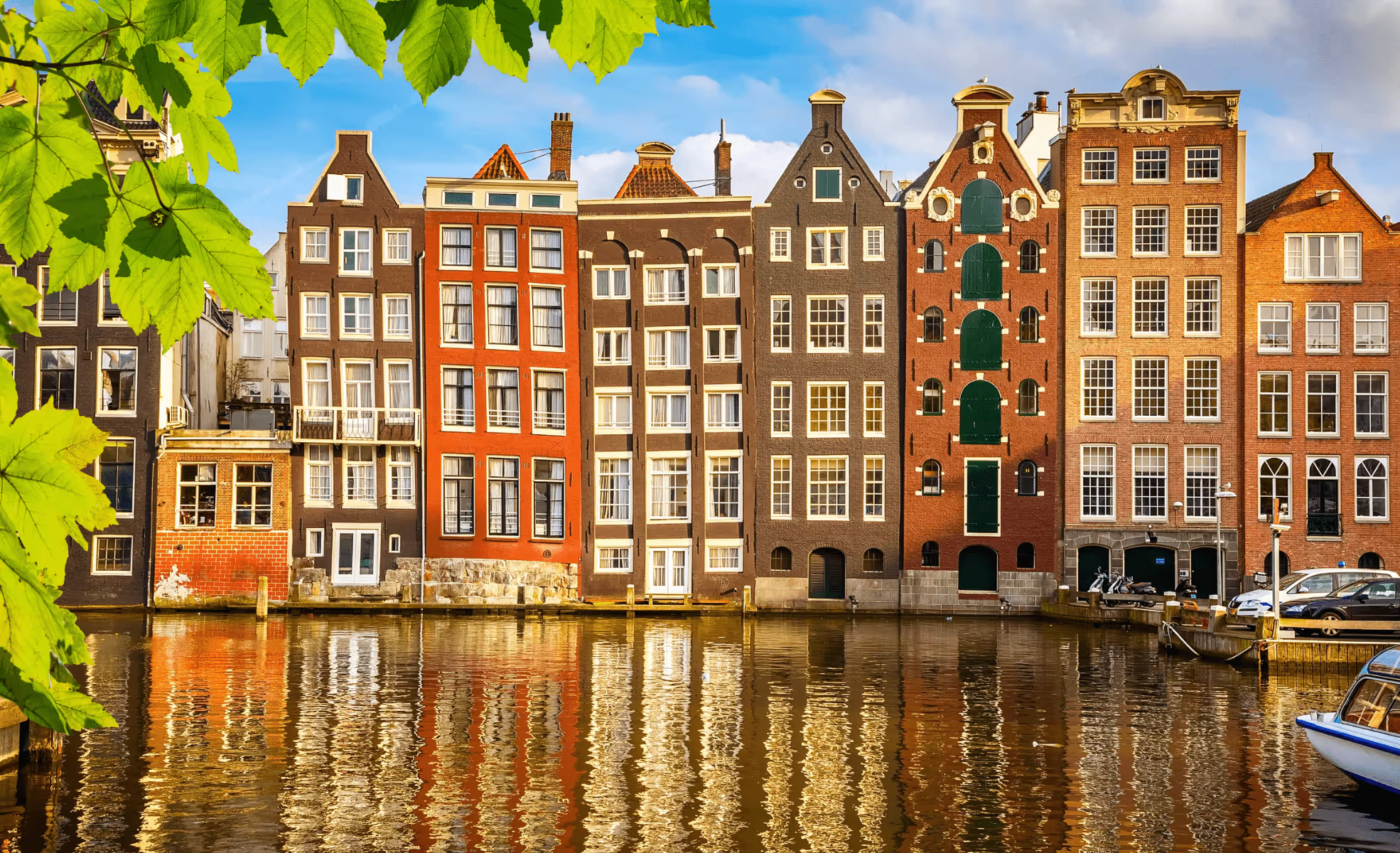
Set in the vibrant and artistic city of Amsterdam, participants will engage with local culture through workshops, gallery visits, and the exploration of public art. These experiences will serve as a springboard for creative inquiry, encouraging students to respond to the city’s diverse stories and evolving cultural landscape.
ISTA Global Challenge
This event is part of ISTA’s season-wide theme: Waves of Change. The challenge invites young people to explore how change—personal, social, cultural, environmental, and historical—shapes our world. Through theatre, students reflect on their role in creating, responding to, and riding the waves of change in their own communities and beyond.
Festival Story: When the City Speaks
The festival story is the central idea that inspires exploration and creative work throughout an ISTA festival.
Amsterdam's neighbourhoods hold powerful stories of people defending their right to live, work, and create in the city. The following examples highlight moments when communities took action to protect the spaces that mattered to them.
Nieuwmarkt Protests (1975)
Location: Nieuwmarktbuurt, Amsterdam
Issue: Demolition of homes for metro construction
In the mid-1970s, the city planned to demolish much of the Nieuwmarkt neighbourhood to build the new metro line. Residents, squatters, and local families began a long, organised resistance. People stood inside their own homes, formed human chains across the streets, hung banners from windows, and staged scenes of "everyday life" in half-demolished buildings so the media would see what was being destroyed. The clashes of March–April 1975, known as the Nieuwmarkt Riots, became a turning point. The protests stopped the planned motorway extension and forced major changes to the project. Inside the metro station today, artworks such as "Wonen is geen gunst maar een recht" ("Housing is not a favour but a right") remain as reminders of the community's fight for their homes.
NDSM "Woningnood" Protest Wall (2010s–present)
Location: NDSM-werf, Amsterdam Noord
Issue: Housing crisis, gentrification, loss of affordable/creative space
At NDSM Wharf, a long public wall has become an evolving site of protest about housing in Amsterdam. Over the past decade, artists, activists, and local collectives have repeatedly painted and repainted it with slogans such as "Woningnood," "Houd NDSM Vrij" (Keep NDSM Free), and "Kraken Gaat Door" (Squatting Continues). The wall is not a fixed artwork. It changes constantly, often during live demonstrations, marches, or community gatherings. People use the space to add new messages, respond to city policy, and make the ongoing housing crisis visible. Because layers are added over time, the wall reads like a public diary — a shared, multi-voiced record of frustration, urgency, and hope.
Mokum Kraakt Occupation (2022)
Location: Nieuwezijds Voorburgwal 302
Issue: Housing crisis and long-term vacancy
On 19 October 2022, the activist group Mokum Kraakt occupied a vacant national-monument building in central Amsterdam. The property had been empty for years, owned by an investor who did not rent it out. During the occupation, the activists hung banners reading "Leegstand is misdaad" ("Vacancy is a crime") and "Vacancy is bad during a housing and energy crisis." For several hours, the building became a visible, lived-in protest. Activists spoke to people from the windows and used their presence inside the space — sitting, reading, drinking tea — as part of the message. The occupation drew media attention and reignited debate about affordability, speculation, and the right to housing. When the police later cleared the building, the removal itself became part of the public narrative.
Cities hold the traces of the people who push back, speak up, and insist on being seen. In Amsterdam, the fight for space — to live, to gather, to create — has shaped the city's walls, streets, and buildings for decades. From the residents of Nieuwmarkt who defended their homes in the 1970s, to the shifting protest wall at NDSM where messages about the housing crisis appear and disappear, to the recent occupation of an empty building by Mokum Kraakt, these acts show how protest becomes part of the landscape. They remind us that the city is not fixed: it is continually rewritten by the people who move through it, mark it, and imagine it differently.







.svg)






.svg)