

Peter Brook
The Art of Storytelling in the Empty Space
17 lessons · 3 hrs 8 min · 7 modules
What you’ll take away
By the end of this course
Understand Brook's life and working practice
You will trace the five stages of Brook's career and understand how his ideas grew out of practice rather than theory.
Examine The Empty Space and its four modes
You will investigate Deadly, Holy, Rough and Immediate Theatre, and understand why the book was a provocation in 1968 and why it still reads as one.
Analyse Brook alongside other theorists
You will compare Brook's thinking with that of Craig, Brecht, Grotowski, Beckett, Artaud and Meyerhold, developing critical tools for interpreting different theatrical approaches.
Investigate theatre as a universal language
You will explore Brook's intercultural work, from Orghast and the Carpet Shows to The Mahabharata, and consider how gesture, rhythm, silence and transformation communicate across cultures.
Apply Brook's aspects of theory to your own work
You will experiment with space, object, ensemble and text as creative starting points, and develop a storytelling piece grounded in Brook's principles.
About this course
What this course covers
Peter Brook spent more than seventy years asking a single question: what is essential for an act of theatre to take place? His answer, set out in The Empty Space in 1968, stripped performance back to the actor, the audience and the space between them. This course follows that search from his early work in post-war Britain to the intercultural productions, from Orghast to The Mahabharata, that redefined what theatre could be.
Guided by Claire Angeletti, who first saw Brook's A Midsummer Night's Dream in Stratford-upon-Avon as a nine-year-old in 1970, you will examine his four modes of theatre, Deadly, Holy, Rough and Immediate, and place him in dialogue with the practitioners who shaped him. Brook resisted systems, so the course does not present one. Instead it gathers his aspects of theory, from set as action to text as a starting point, alongside his idea of the storyteller with many heads: the performer in dialogue with the self, the ensemble and the audience.
Theory is tested in practice throughout. Students from the International School of The Hague appear in filmed workshops exploring presence, ensemble listening, direct address, object transformation and a staging of the storm from The Tempest. The course closes with a creative task you can carry straight into a classroom or rehearsal room: a Brook-inspired storytelling piece made with an empty space, a single object and a focused language of sound, text, movement and telling.
Before you enrol
Everything you need to know before you begin
Designed for
- Theatre and drama educators
- IB Theatre teachers and students
- Pre-university drama and theatre students
- Theatre-makers, directors and devisers
- Anyone interested in why theatre matters
How you’ll learn
- Expert guidance from an experienced performer, director and educator
- Brook's ideas explained in his own words
- Historical and theoretical context for his practice
- Guided analysis of landmark productions
- Filmed student workshops bringing the ideas to life
- A practical creative task for your own space
Course roadmap
How this course is structured
7 modules · 17 lessons · 3 hrs 8 min
PROLOGUESetting The Stage1 lesson · 9 min
- Welcome & Introduction9 min
MODULE ONEPeter Brook – Storyteller, Theorist, World Theatre Pioneer3 lessons · 44 min
- Lesson 1: Origins of a Master Theorist16 min
- Lesson 2: Why Theatre Tells Stories Differently13 min
- Lesson 3: Brook in Context — Influences from Theatre Theorists15 min
MODULE TWOThe Empty Space3 lessons · 25 min
- Lesson 1: Introducing The Empty Space8 min
- Lesson 2: Deadly Theatre vs. Holy & Rough Theatre9 min
- Lesson 3: Immediate Theatre - The Living Spark8 min
MODULE THREEThe Storyteller with Many Heads3 lessons · 52 min
- Lesson 1: First Storyteller: A dialogue with the Self18 min
- Lesson 2: The Second Storyteller: The Performer with the Ensemble17 min
- Lesson 3: The Third Storyteller: The Performers with the Audience17 min
MODULE FOURThe Universal Language of Theatre2 lessons · 36 min
- Lesson 1: Storytelling Across Cultures and Languages20 min
- Lesson 2: What Stories Need Telling – Shakespeare and Universality16 min
MODULE FIVELegacy and Application – Performing Brook’s Theory Today3 lessons · 17 min
- Lesson 1: Brook’s Legacy – Global Ensemble and Devised Theatre6 min
- Lesson 2: Applying Brook to Your Own Theatre Work11 min
- Stimulus: Night in Al-Hamra by Saadi Youssef
EPILOGUEFinale2 lessons · 5 min
- Course Wrap-Up: Closing Reflections5 min
- About The Presenter
Learn from the experts
About your presenter
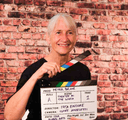
Claire Angeletti
Theatre practitioner, director, voice coach and educator
Claire Angeletti’s relationship with Peter Brook’s work began in 1970, when, aged nine, she saw A Midsummer Night’s Dream in Stratford-upon-Avon and was inspired to pursue a life in theatre. Emerging from the experimental group theatre movement of the 1980s, she has since worked internationally for more than four decades as a performer, director, voice coach and educator. Since 2001, her work in theatre education has focused particularly on devising, collaborative creation and Sketchbook Theatre, using images, movement and improvisation to generate stories and give young people greater creative agency. Claire continues to lecture, direct and lead workshops internationally, and throughout this course draws closely on Brook’s own words from his books and interviews to explore his ideas and practice.
Before you buy
Frequently asked questions
New Is this course suitable for IB Theatre teachers and students?
Answer…Yes. Brook is one of the most widely studied theatre theorists in pre-university drama, and the course supports both the reearch and the practical exploration sides of that study. It is designed to complement all pre-university drama and theatre syllabuses, so it is equally useful to non-IB educators, students and practitioners.
Do I need previous experience of Brook's work?
No. The course begins with Brook's life and early career and introduces every idea from first principles. Terminology such as Deadly, Holy, Rough and Immediate Theatre is explained as it arises.
Is the course theoretical or practical?
Both. Roughly the first half builds context and theory, while the later modules move into Brook's rehearsal room and into filmed workshops. Each of the five aspects of theory is turned into a set of practical questions you can take into your own work.
Take it further
From the ISTA Store
 Theatre Theorist Cards Set 1 - Story and Narrative DeckThis innovative set of 52 playing cards serves as a creative classroom companion, designed to ignite and enrich the exploration of theatre theorists and their theories for drama and theatre students.£22.00Buy Now
 Theatre Theorist Cards Set 2 - Movement and Physical Theatre DeckThis innovative set of 52 playing cards serves as a creative classroom companion, designed to ignite and enrich the exploration of theatre theorists and their theories for drama and theatre students.£22.00Buy Now
 Theatre Theorist Cards Set 3 - Production and Stage Design DeckThis innovative set of 52 playing cards serves as a creative classroom companion, designed to ignite and enrich the exploration of theatre theorists and their theories for drama and theatre students.£22.00Buy Now
 Theatre Theorists - Digital Poster SetIgnite your students’ creativity with this vibrant collection of 39 high quality theatre theorist posters, designed to inspire and elevate any classroom or creative space.£50.00Buy Now
Continue your learning journey
Explore more expert-led Encore courses

ISTA Encore
Ready for Peter Brook?
Create your free ISTA account and we’ll take you straight to Peter Brook inside STAGE.



Already have an account? Log in